September 24, 2026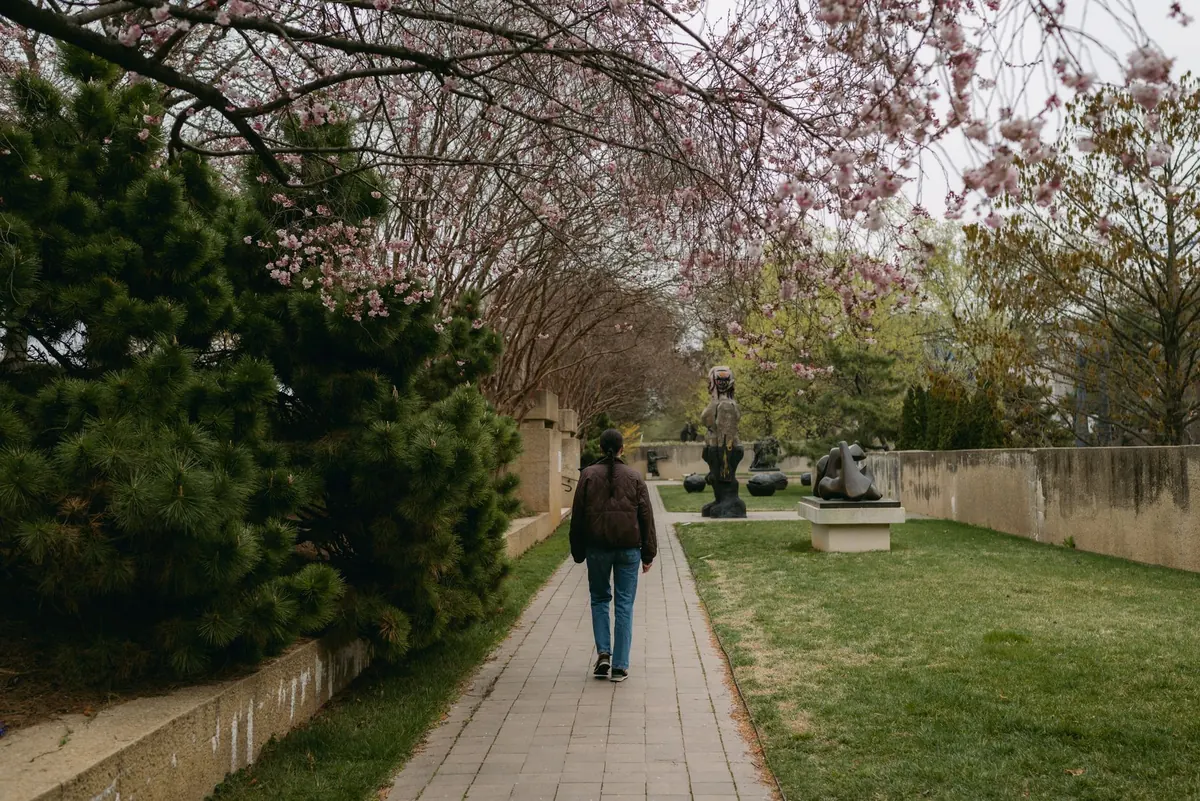
There is nothing to buy, nothing to download and no special clothing involved. Mindful walking is simply walking while paying attention — to your feet, your breath, and whatever your local park happens to be doing that morning. It works on a ten-minute loop round the block, a stretch of canal towpath, or the long grass at the edge of a playing field. It also works in drizzle, in flat grey light, and in the kind of wind that takes your hood off. You just need to know what to do with your attention.
What Mindful Walking Actually Is
It is not a performance. It is not a slow, solemn shuffle with your hands clasped, and it is not about emptying your head. Thoughts will arrive — a work email, what's for tea, whether you locked the back door. That is not failure. Noticing that you have drifted and bringing your attention back to the feeling of your left foot meeting the ground is the whole exercise.
Most beginners assume they need a quiet mind before they start. You do not. You need a route you don't have to think about, and one or two things to notice. That is roughly it.
Pick a Patch You Can Walk Without Thinking
Choose somewhere within fifteen minutes of your front door: a park with a path round the edge, a canal towpath, a slice of common, a riverside walk, a promenade, or the quiet corner of a cemetery. Familiarity is a feature, not a limitation. When you already know where you are going, you can spend your attention on the walk instead of the map.
A few practical things make a good first route. Ten to twenty minutes is plenty. A loop is easier than an out-and-back because you are less tempted to check how far you have gone. Paths that don't require dodging traffic let you relax your guard, and a bit of variety — trees, water, an open field — gives your senses more to work with. If you feel self-conscious about walking slowly in public, go early, go at lunchtime, or choose the section where other people are also wandering about with no particular purpose.
Five Sensory Anchors to Lean On
An anchor is simply the thing you return to when your mind wanders. Pick one for the whole walk rather than switching constantly.
- Your feet. Feel the heel land, the roll through the sole, the push off the toes. Gravel and wet pavement make this easier to notice; grass makes it softer and quieter.
- Your breath. Don't change it, just find it. If counting helps, try three steps breathing in and four breathing out — and drop the count if it makes you tense.
- Sound. Find the nearest sound and the furthest one. A blackbird, a distant bus, a dog two gardens away, the tick of a bike freewheel behind you.
- Sight. Pick one thing and stay with it for ten steps. Light through leaves, ripples on a pond, the colour of a bandstand roof.
- Touch and smell. Cold air on your face, a gate rail under your palm, damp earth after rain, cut grass, someone's woodsmoke.
Your First Mindful Walk, Step by Step
- Leave the headphones at home and put your phone on silent. If you want it for safety, keep it in a pocket rather than your hand.
- Stand still at the gate for a minute. Feel your weight through both feet and let your breathing settle.
- Set off at your normal pace, a touch slower. Mindful is not the same as slow.
- Choose one anchor — usually the feet — and stay with it for the first five minutes.
- When you notice you are planning tomorrow's meeting, name it quietly ("thinking") and come back to your feet. No scolding.
- Pause twice for about thirty seconds. Stand, listen, look up.
- Before you go back inside, notice one thing that has shifted: your shoulders, your breathing, your mood. Not judging it, just noticing.
Walking Through Whatever the Weather Sends
Rain is not a reason to skip it, but it is a reason to dress properly. A hooded waterproof and shoes with grip will handle most British drizzle, and rain on a hood makes an excellent anchor. Fewer people are out, which is its own reward. After heavy rain, stay off flooded paths and be careful on wooden bridges and steps, which turn slippery fast.
Wind gives you something to feel on your face and something to watch in the trees. Keep away from large trees and overhanging branches in high winds, and avoid parks for a day or two after a named storm until any fallen branches have been cleared. On hot days, walk in shade, take water and go earlier or later rather than at midday. In winter, stick to main paths, keep to lit routes if you are out after work, and watch for ice in shaded corners where the sun never reaches. On muddy commons, wellies and a determination to stay on the path will save both your shoes and the grass.
When Your Mind Won't Settle
Some walks will feel restless and dull. That is normal, and it is not evidence that you are doing it wrong. Shorten the walk to ten minutes. Walk the same route often enough that you stop making decisions. Use a narrow anchor, such as counting steps from one to ten and starting again. Treat boredom as a sensation you can notice rather than a problem to solve.
If self-consciousness is the sticking point, remember that almost nobody is watching, and the few who are will have forgotten you by the next lamppost. Choosing a time when the park is full of dog walkers, joggers and people on their phones makes you far less conspicuous than you feel.
Keeping It Going
The habit sticks when it is small and unglamorous. Aim for three short walks a week, at roughly the same time, on the same familiar route. Attach it to something you already do — after the school drop-off, before you open your laptop, on the way back from the shop. Keep a coat and a pair of grippy shoes by the door so weather is never the deciding factor.
One anchor is enough. Twelve minutes counts. You do not need to feel calmer afterwards, and you do not need to have done it well. You only need to have noticed something you would otherwise have walked straight past.
If you are recovering from illness or injury, or you have a heart, lung or joint condition, speak to your GP or a physiotherapist before increasing your distance or pace.
Photo: Paige Thompson / Pexels